The two paint options I compared
In one renovation, I used Behr Frost in a flat/matte finish. In another, I used Sherwin-Williams Drift of Mist on the walls with Pure White on the ceiling and trim.
In this guide
Both are light, neutral looks that can work well in a rental. But after living with the finished results, I prefer the Sherwin-Williams combination.
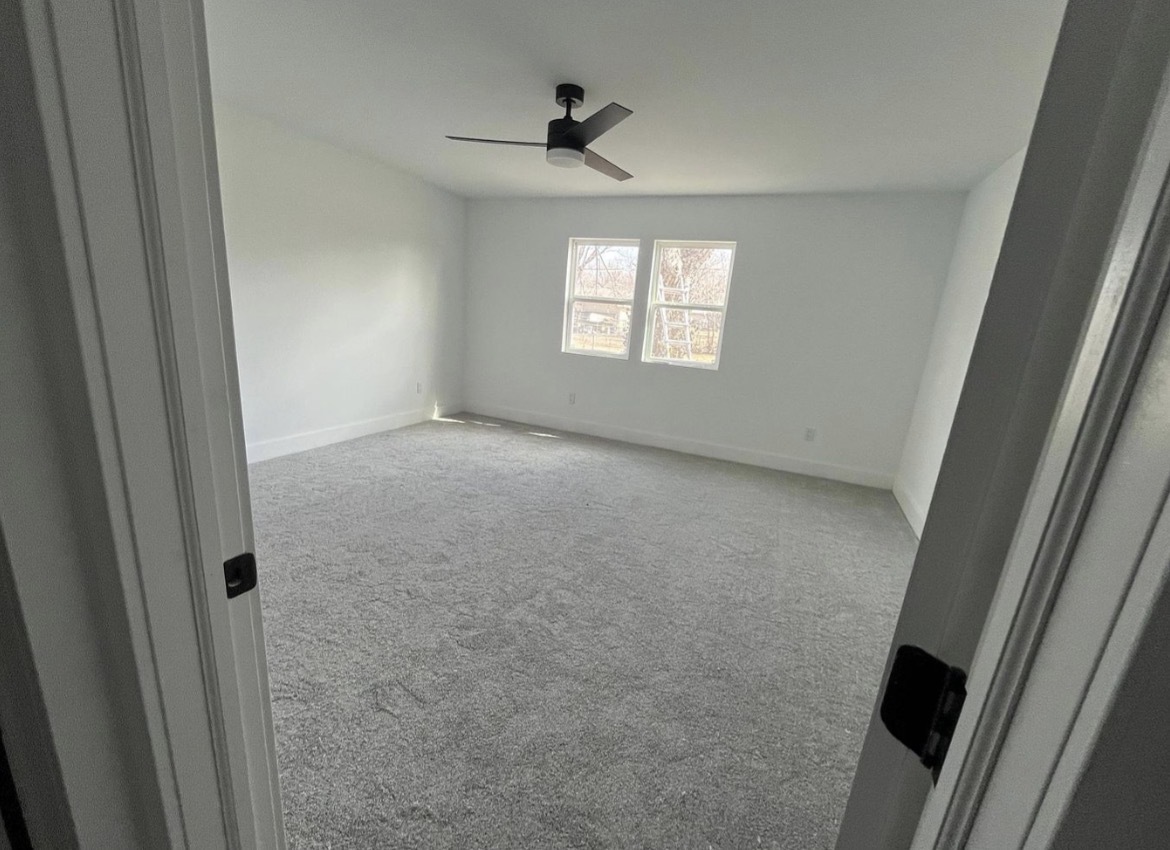
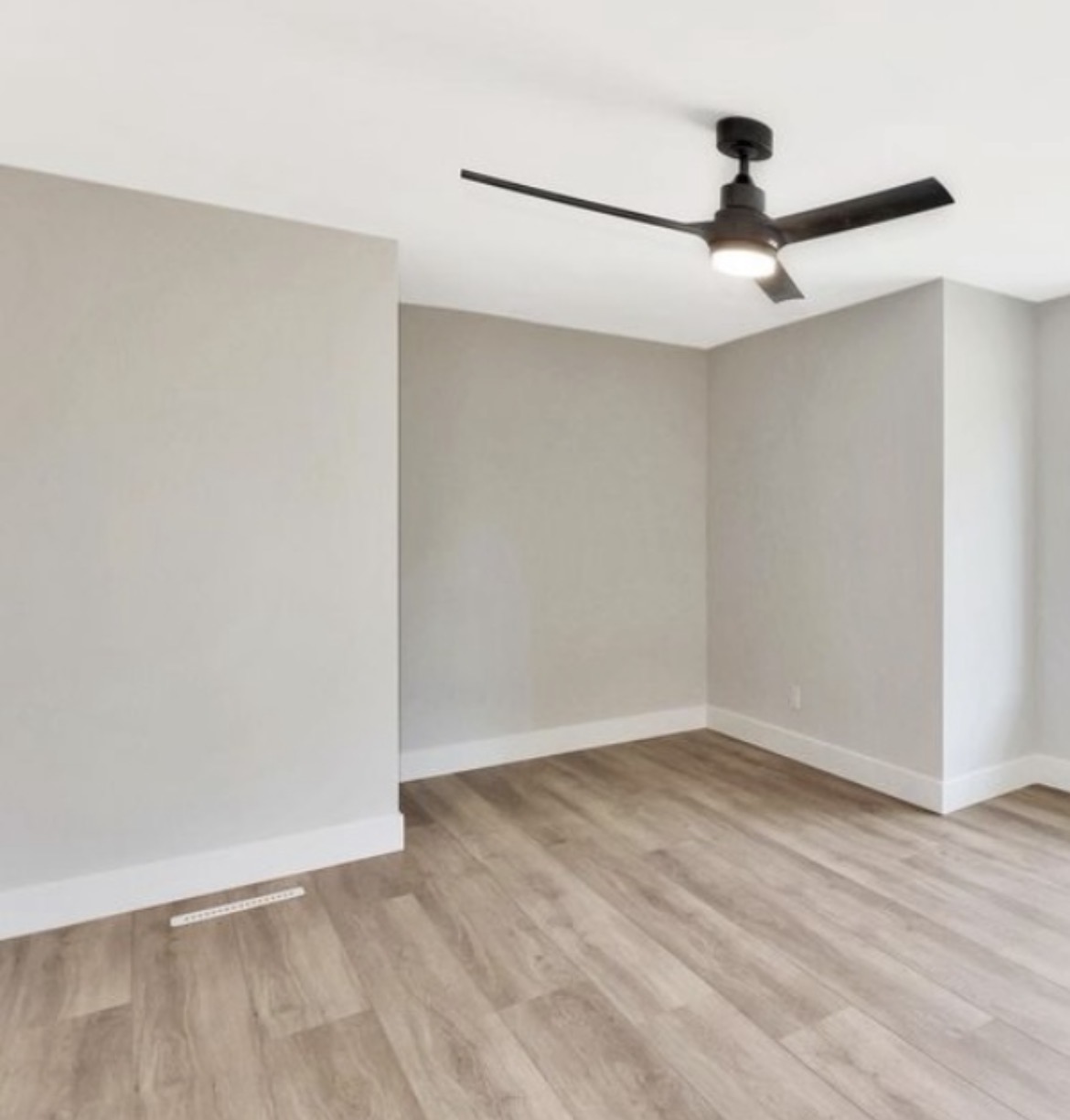
The rooms have different flooring, lighting and architecture, so the photos are not a scientific color test. They are examples from two real renovations and show the overall finished look I achieved in each property.
1. The cheaper paint gets marks more easily
This has been one of the biggest differences for me. The less expensive flat paint seems to show scuffs and marks more easily in day-to-day use.
That matters in a rental. Furniture gets moved, bags brush against walls, hands touch corners and normal life eventually shows up on the paint. A wall can still technically be painted and protected while looking worn sooner than I want it to.
In my experience, the Sherwin-Williams paint has been more forgiving. I have found myself dealing with fewer visible marks, which matters when I want a property to stay looking clean between turnovers.
2. I think the more expensive paint simply looks better
This part is subjective, but it matters to me. The Drift of Mist walls paired with Pure White trim and ceilings give the room a softer, more finished look.
The contrast is subtle, but it makes the trim feel intentional instead of letting every surface blend into the same white. The final space feels warmer and more elevated without using a trendy or dramatic wall color.
Paint covers a huge percentage of what you see in a room. Even when the price difference per gallon is relatively small compared with the total renovation budget, the finished paint is visible everywhere.
3. I used more of the cheaper paint to get the result I wanted
This is where the cheaper price per gallon can become misleading. In my projects, I have needed more of the budget paint to achieve the coverage and finished appearance I wanted.
That can mean more gallons, more coats, more touch-ups and more labor. If I save money on each gallon but have to buy more product or pay for more painting time, some of the upfront savings disappear.
The labor can matter more than the paint price
If you are paying someone else to paint, an extra coat throughout an entire property can cost more than upgrading the paint itself. Even when I am doing part of the work myself, another coat still means more time, supplies and project days.
That is why I now look at paint as part of the total rehab cost instead of choosing solely by the shelf price.
Does that mean cheaper paint is always a bad choice?
No. I can still see situations where a budget paint makes sense. A lower-cost rental, a low-traffic area, a ceiling or a property that is likely to be repainted frequently can all change the math.
I also would not assume every premium paint automatically outperforms every budget option. Prep work, primer, sheen, application and the specific paint line all affect the result.
But based on the options I have personally used, I am more willing to spend extra on the wall paint now because I notice the difference after the project is finished.
What I would choose now
Between these two renovation looks, I prefer Sherwin-Williams Drift of Mist on the walls with Pure White on the ceiling and trim.
For me, the higher upfront paint cost has been worth it because I prefer the finished appearance, I have found that it marks less easily, and I have needed less product to achieve the result I want.
When I multiply those differences across an entire house, the upgrade feels much more meaningful than the price difference on a single gallon.
The bigger renovation lesson
One thing renovating rentals has taught me is that the cheapest material is not always the cheapest decision.
Sometimes saving $20 or $30 on a product creates more labor, more maintenance or a finish that you end up wanting to redo sooner. Other times, the budget option performs perfectly well and the savings are worth taking.
The goal is not to buy the most expensive version of everything. It is to spend more in the places where the extra cost actually improves the finished property or reduces future work.
For my renovations, paint has become one of those places.
Planning a rental renovation?
Use the free rehab calculator to organize materials, labor and contingency before you start, or head back to the rehab stage of the Rental Property Roadmap.
For another real rental transformation, see the kitchen remodel before and after, with cabinet cost and material links.